The bedroom is often the first room where clutter quietly takes over. Without a clear storage strategy, even a well-designed room can start to feel cramped. One of the most effective changes you can make is to invest in furniture that works double duty. A bed frame with built-in drawers eliminates the need for a separate chest, while an ottoman at the foot of the bed offers hidden storage without taking up extra floor space. If you have high ceilings, consider floor-to-ceiling shelving — vertical space is consistently underused in small bedrooms and can dramatically increase your storage capacity.
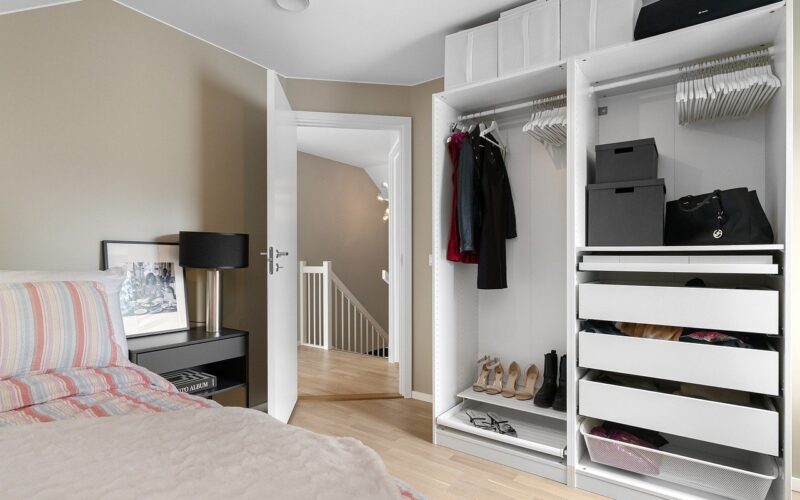
Wardrobes and built-ins deserve particular attention. Fitted wardrobes make far better use of available wall space than freestanding alternatives, as they can be designed around the exact dimensions of your room. Inside the wardrobe, slim velvet hangers allow you to fit significantly more garments on a single rail. Shelf dividers, stackable boxes, and over-door organisers can transform a disorganised interior into a well-structured system. The goal is to ensure that every centimetre of your wardrobe is being actively used, not just the parts you can easily see.
Mirrors are another powerful tool in a small bedroom. A full-length mirror on a wardrobe door reflects light and creates the perception of more space, without requiring any additional room. Similarly, choosing a lighter colour palette for your walls and bedding makes the room feel airier and more open. Bulky furniture in dark finishes tends to visually shrink a room, so opting for lighter wood tones or painted pieces can make a noticeable difference to how spacious the room feels.
Clever storage solutions for small bathrooms
Bathrooms present a unique set of challenges because the available wall and floor space is often interrupted by fixtures. The key is to focus on recessed storage and wall-mounted solutions wherever possible. Recessed shelving built into the wall between studs offers a sleek, space-saving alternative to bulky bathroom cabinets. Above the toilet is another area that is frequently overlooked — a simple ladder shelf or a wall-mounted cabinet can turn this often-empty space into useful storage for towels, toiletries, and spare supplies.
On the countertop, the principle of containment goes a long way. Grouping items into a small tray or basket reduces visual clutter and makes surfaces feel more organised, even when they are not perfectly tidy. Magnetic strips mounted on the inside of cabinet doors are a surprisingly practical way to store bobby pins, nail scissors, and other small metal items. Under the sink is also worth reassessing — drawer dividers and tiered organisers can dramatically improve how much you can store in what is often a chaotic space.
Shared principles for both rooms
Regardless of the room, a few principles apply consistently when working with limited space. Reducing the total number of items you own is, ultimately, the most effective strategy. Regular decluttering prevents the gradual accumulation of items that rarely get used but persistently take up space. For every new product or item that enters the room, consider whether something else can leave. This kind of mindful approach to what you bring into a small home has a compounding effect over time.
Lighting also plays a more significant role than many people realise. A well-lit room feels more spacious and easier to navigate, while a dark, shadowy space tends to feel smaller and more closed in. In both the bedroom and bathroom, layering light sources — combining ceiling lighting with wall sconces or task lighting — makes the space feel more considered and generous. Small homes do not have to feel limiting; with the right strategies in place, they can feel just as comfortable and functional as larger ones.